What is Trump’s objective in Iran?
How it relates to what took place in Venezuela, and differs from "regime change" and from Israel's wishes for Iran.
3/3/2026
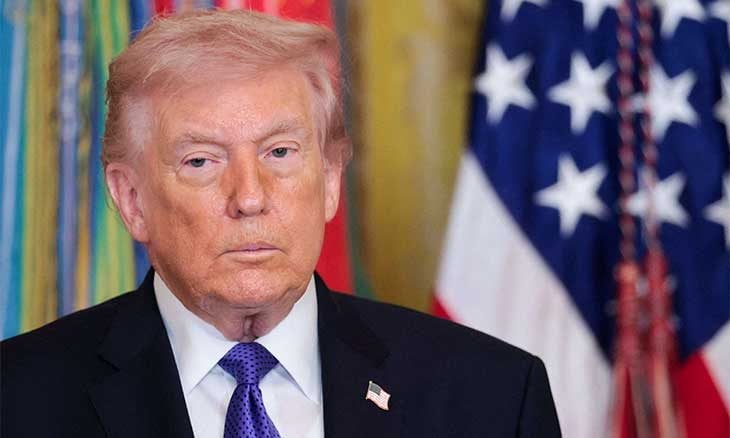
What is Trump’s objective in Iran?
Gilbert Achcar
As we predicted a week ago, and in light of the Iranian regime’s continued intransigence—its refusal to commit to ending uranium enrichment and to negotiate limits on its ballistic missile programme—it faced “the risk of a military strike that could create a situation threatening the entire regime, and which might ultimately lead to Khamenei’s removal from power in one way or another.” We concluded that the impending US strike was “planned to target Ali Khamenei specifically, along with the heads of the hardliners in the Iranian regime, in the hope that their removal would pave the way for Tehran’s submission to Washington’s desiderata.” (“A Game of Chicken Between Washington and Tehran?” [in Arabic], Al-Quds Al-Arabi, 24 February 2026).
We also explained how Donald Trump’s approach to Iran falls within the framework of the strategy he successfully implemented in Venezuela, which focuses on “changing the regime’s behaviour” rather than “changing the regime” itself, as the George W. Bush administration sought to do by invading Iraq in 2003 (see “US: an old-new imperial doctrine”, Le Monde diplomatique, February 2026). A significant difference between Venezuela and Iran, however, is that Washington had connections with key figures within the Venezuelan regime and believed they would comply with its demands once subjected to intense pressure and after the removal of their president, Nicolás Maduro, through his abduction. In Iran, by contrast, the regime exercises far tighter control and oversight over its leading figures, making the risk of any of them reaching a behind-the-scenes accommodation with Washington far lower. Moreover, kidnapping the Supreme Leader of the Islamic Republic of Iran was not a feasible option, and eliminating him alone would in any case have been insufficient to alter the regime’s trajectory.
For this reason, the American operation against Iran is far larger and more complex than the one that targeted Venezuela. What, then, is the Trump administration’s objective in Iran? It bears repeating that it is not “regime change,” despite the insistence of those who fail to grasp the vast difference between that policy—as exemplified by the occupation of Iraq—and large-scale military operations. The current onslaught is not accompanied by any intention to occupy Iran (even assuming such an occupation were possible, given that it would require a military effort more akin to the Korean and Vietnam Wars than to the occupation of a much-weakened Iraq in 2003—something the US administration is neither politically capable of nor willing to undertake). Everything Trump has done thus far appears consistent with the approach described above, even to the point of reassuring the backbone of the Iranian regime—the Revolutionary Guard Corps—that he guarantees them “total immunity” if they halt the war and submit to Washington’s will.
This suggests that Washington’s wager in Iran rests on hope rather than certainty, unlike its calculations in Venezuela. The Trump administration is betting that overwhelming military pressure, combined with the elimination of several leaders—including the head of state—will tip the balance in favour of pragmatic, non-ideological “moderates”. These are figures who believe that preserving the mullahs’ regime now requires abandoning the posture of “resistance” and “steadfastness”, relinquishing regional expansionist ambitions, and pursuing political and economic openness toward the United States. Such a shift, they believe, would return Iran to a path of economic development for which it possesses considerable potential. It would also prolong the regime’s lifespan and diminish popular opposition, especially if accompanied by a significant easing of the repression that weighs on daily life, particularly for women. The noose has tightened around the mullahs’ regime to the point that it can no longer continue along its previous course—unless the hardliners opt to transform the country into an absolute, isolated, and impoverished dictatorship akin to North Korea. That scenario cannot be ruled out, of course, although the Iranian people have shown themselves far less susceptible to indoctrination and submission than the population of that unfortunate country.
Here lies the fundamental difference between the Trump administration’s objectives in Iran and those of the Zionist government—indeed of the Zionist state. Netanyahu has repeatedly called on the Iranian people to overthrow the regime and has openly expressed his desire for the restoration of the Pahlavi dynasty, which was overthrown by the 1979 Iranian Revolution, as represented by Reza Pahlavi, son of the deposed Shah. Washington, however, has not backed the Shah’s son, just as it did not support the Venezuelan opposition leader, judging both incapable of governing their respective countries. Its primary objective is for the Iranian regime, with its core structures intact, to cooperate with the United States along the lines of Washington’s other regional allies. It fears the regime’s collapse, recognizing that such an outcome would likely lead to armed chaos and fragmentation, producing extreme instability in the Gulf region—an outcome entirely contrary to Washington’s interests, and even to Trump’s personal and familial interests (not to mention those of the Kushner and Witkoff families).
By contrast, the Zionist government favours such a collapse, which aligns with the longstanding Zionist plan to fragment the entire Middle East (see “Reviving the Zionist Project to Fragment the Arab East”, 22 July 2025) and would reinforce the image of the State of Israel as “a villa in the jungle”, as former Israeli prime minister Ehud Barak once described it—echoing the founder of modern Zionism, Theodor Herzl, who promised that the “State of the Jews” he envisioned would be “an outpost of civilization as opposed to barbarism”, borrowing from the colonial lexicon. Meanwhile, the Zionist state has surpassed all other regional states in barbarity through the genocidal war it has waged—and continues to wage—in Gaza.
Translated from the Arabic original published in Al-Quds al-Arabi on 03 March 2026. Feel free to republish or to publish in other languages, with mention of the source.